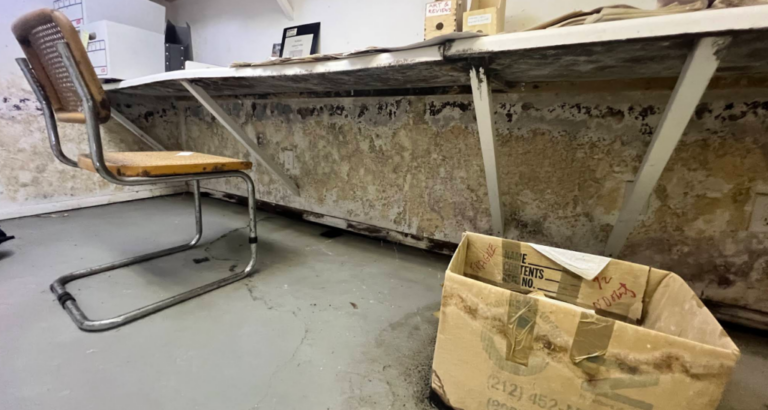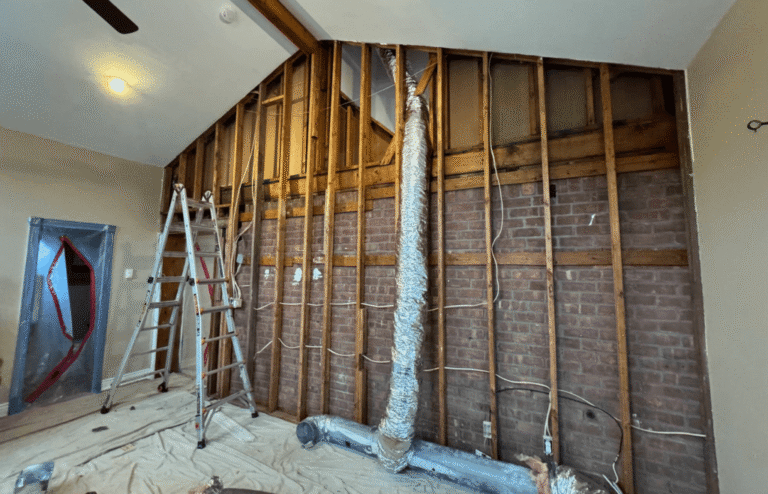
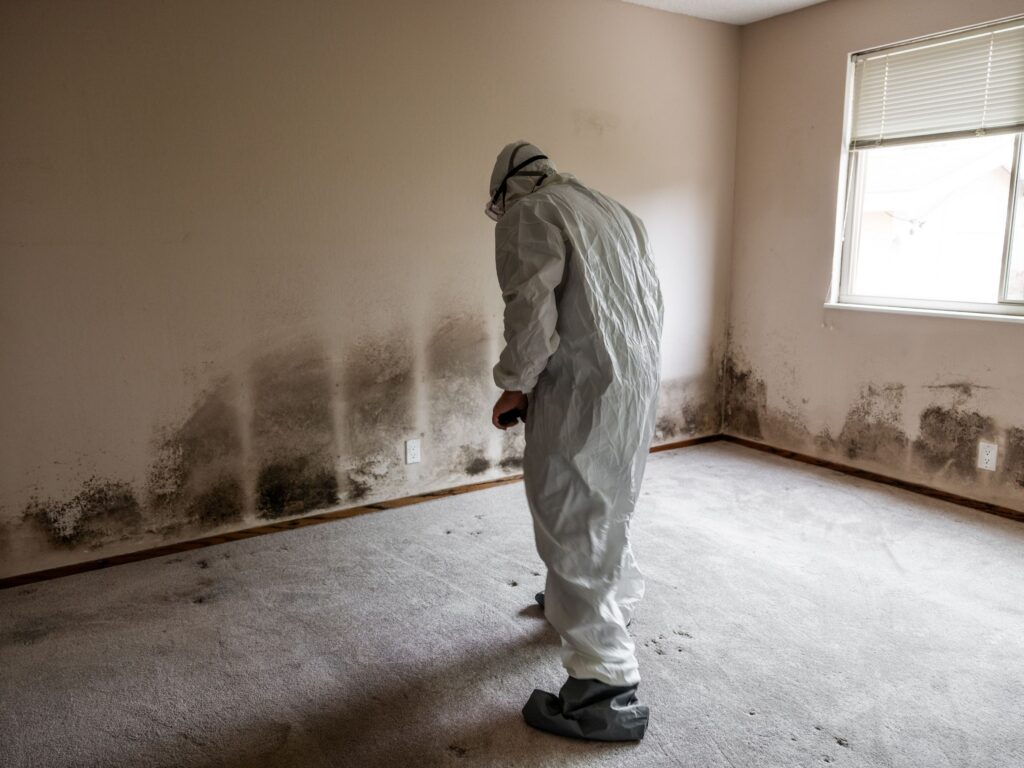
You notice a musty smell in the basement. A stain has appeared on the drywall after a leak. Or maybe you can see something that looks like mold but have no idea how far the problem extends.
Then you start researching and find two services that sound almost identical: mold inspection and mold testing.
They are not the same.
A mold inspection focuses on the property itself—looking for visible mold, moisture, water damage, and conditions that could allow mold to grow. Mold testing involves collecting samples that may be sent to a laboratory for analysis.
For many homeowners, the better question isn’t simply, “Should I test for mold?” It is:
What am I trying to find out, and what type of evaluation will answer that question?
Here is how mold inspection vs. mold testing differs and when each may make sense.
Key Takeaways
- A mold inspection evaluates the property for mold, moisture, water damage, and conditions that may contribute to mold growth.
- Mold testing involves collecting air, surface, or material samples for analysis.
- Testing is not automatically necessary every time mold is visible or suspected.
- The New York State Department of Labor says air sampling and mold testing are unnecessary in most cases and emphasizes a thorough visual inspection.
- The right approach depends on what you are seeing, the property’s history, and what information is needed to determine the next step.
Mold Inspection vs. Mold Testing: The Difference at a Glance
It helps to think of an inspection as an investigation of the property, while testing examines a specific sample.
Mold Inspection or Assessment | Mold Testing | |
Main purpose | Evaluate the property and suspected mold or moisture conditions | Analyze collected samples |
Focus | Where a problem may be occurring and what may be contributing to it | What is present in a particular sample |
May involve | Visual inspection, moisture evaluation, examining affected areas | Air, surface, or material sampling |
Can help determine | Extent of visible conditions, moisture sources, and next steps | Information about the sample collected |
Most useful when | You need to understand what is happening in the property | There is a specific reason that sampling would provide useful additional information |
What Does a Mold Inspection Actually Look For?
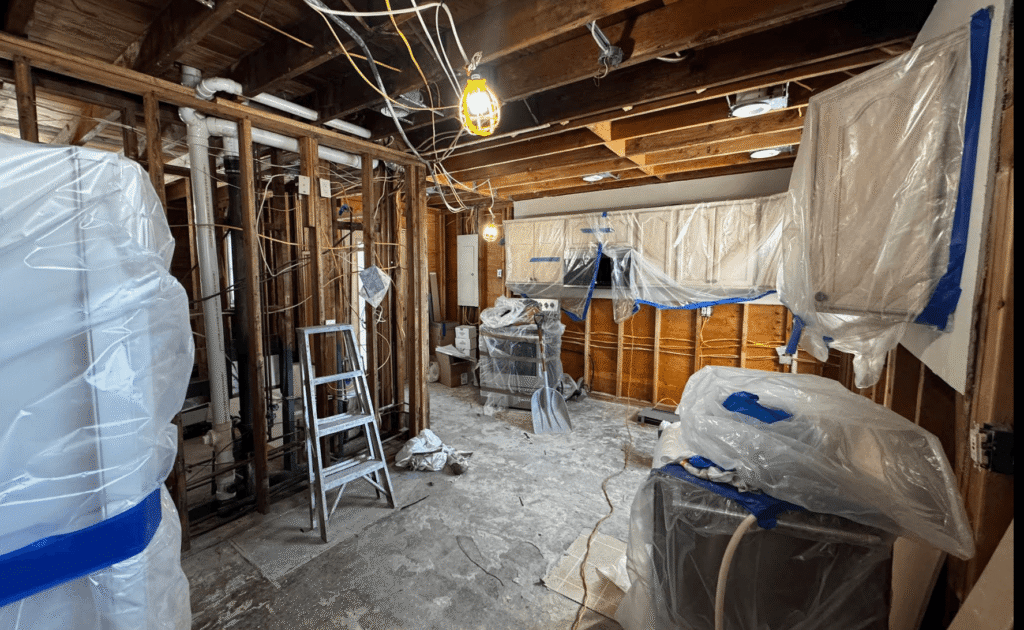
A professional mold inspection or assessment is intended to determine what is happening in the building—not simply whether mold spores exist somewhere in the environment.
Depending on the property and the reason for the inspection, an assessor may look for conditions such as:
- Visible or suspected mold growth
- Water stains and discoloration
- Damp or moisture-damaged materials
- Plumbing or roof leaks
- Basement moisture
- Attic moisture conditions
- Condensation around windows or other surfaces
- Signs of previous water damage
- Musty or unusual odors
- Conditions that may allow moisture to remain trapped
The important question isn’t just “Is there mold?”
Suppose you find suspected mold on a section of basement drywall.
Knowing that something is growing on the surface is only part of the problem.
You also need to understand:
- Why did this area become damp?
- Is the moisture source still active?
- Are nearby materials affected?
- Is the problem limited to the visible area?
- What needs to be corrected before cleanup begins?
Finding and correcting the moisture source matters because removing visible mold without addressing the water or humidity problem can allow the same conditions to return.
What Does Mold Testing Actually Tell You?
Mold testing generally means collecting one or more samples and having them analyzed.
There are several ways samples may be collected.
Air Sampling
Air sampling collects airborne material from a specific area during a particular period.
The sample can then be analyzed by a laboratory.
Air samples should be understood in context. Mold spores naturally exist in indoor and outdoor environments, which is one reason a result cannot simply be reduced to “mold detected” versus “no mold detected.”
Surface Sampling
Surface samples may be collected directly from an area where suspected mold or another material is present.
Depending on the situation, an assessor may use methods such as a swab or tape sample.
Material Sampling
In some situations, a portion of an affected material may be collected for laboratory evaluation.
The appropriate sampling method depends on what question needs to be answered.
Most importantly, testing provides information about the samples that were collected. It does not automatically identify every area of hidden mold or explain why a building is wet.
That still requires evaluating the property.
Do You Always Need Mold Testing?
No. Mold testing is not automatically necessary every time mold is suspected.
New Jersey’s own mold guidance is clear on this point.
If a visual inspection reveals mold, the New Jersey Department of Health says additional testing generally is not necessary. Resources are often better directed toward correcting the moisture problem and addressing the contamination.
The EPA gives similar guidance, stating that in most cases where visible mold growth is present, sampling is unnecessary.
That leads to a useful question before paying for testing:
What will the results help us decide?
Testing is more useful when it has a clear purpose.
If nobody can explain why a particular sample is being collected or how the results will affect the next step, ask for more information before automatically agreeing to it.
Not Sure Which One You Need? Start With the Property, Not the Test
If you have noticed a musty smell, water staining, damp materials, suspicious discoloration, recurring moisture, or changes after a leak, you do not need to guess which mold service to purchase.
Start with the property.
The goal should be to understand what is happening, where it is happening, and what information is still missing.
Sometimes a thorough inspection provides the information you need.
In other cases, the inspection identifies a reason that targeted mold testing would add useful information.
The important part is that testing should support the investigation—not replace it.
If you have a mold or moisture concern in Bergen County, NJ, contact Airborne Inspection Pros to discuss what you are seeing and whether a professional mold inspection, targeted testing, or another next step makes sense for the property.